

New Survey: Less than Half of United States Adults with Diabetes Understand Their Risk for Vision Loss
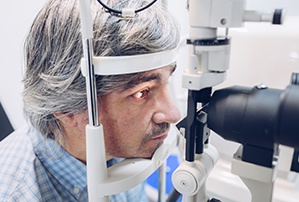
A new survey released this month by Regeneron Pharmaceuticals, Inc. reveals that less than half of recently surveyed United States adults with diabetes recognize their risk for vision loss. Regeneron is a science-based biopharmaceutical company that discovers, invents, develops, manufactures, and commercializes medicines for the treatment of serious medical conditions.
[Please note: Regeneron Pharmaceuticals, Inc., which commissioned this survey, is also the developer of the injectable drug EYLEA, approved by the FDA in 2014 for the treatment of diabetic macular edema.]
About the Survey
Excerpted from New Survey of U.S. Adults with Diabetes Reveals Less than Half Understand Their Risk for Vision Loss, via PR Newswire:
The Diabetes Eye Health Survey was conducted by Everyday Health, Inc., a provider of digital health and wellness solutions. Everyday Health, Inc. conducted a quantitative online survey among a representative sample of 1,074 U.S. adults diagnosed with diabetes, from August 4 – 17, 2015.
Less than one-fifth (18 percent) of respondents said they were familiar with diabetic macular edema (DME), a term that refers to swelling of the macula and is a complication of diabetic retinopathy, the most common diabetic eye disease.
The survey found that nearly one third (30 percent) of respondents reported they do not get an annual comprehensive dilated eye exam, a test that can help to detect DME and diabetic retinopathy.
Of those respondents who do not get an annual dilated eye exam, more than half (56 percent) were not aware that the exam is recommended by the National Eye Institute for people with diabetes or that it could help protect against vision loss associated with the disease.
"Getting an annual comprehensive dilated eye exam is a critical step that may help to prevent future vision loss by identifying issues early," said Dr. Allen Ho, MD, FACS, Director of Retina Research, Wills Eye Hospital and Professor of Ophthalmology at Thomas Jefferson University. "These survey findings underscore the need for more awareness among the diabetes community about their risk for vision loss and what they can do help protect their vision."
Additional findings from the online survey of 1,074 people living with diabetes include:
- When thinking about diabetes complications, those surveyed said eye disease is the number two concern, behind cardiovascular disease.
- Despite concerns, however, less than half (44 percent) of respondents said they were very knowledgeable about eye diseases that could result in vision loss.
- Only one third (35 percent) of respondents said they were familiar with diabetic retinopathy, specifically.
About Diabetic Eye Disease
Diabetic Retinopathy
Although people with diabetes are more likely to develop cataracts at a younger age and are twice as likely to develop glaucoma as people who do not have diabetes, the primary vision problem caused by diabetes is diabetic retinopathy, the leading cause of new cases of blindness and low vision in adults aged 20-65:
- "Retinopathy" is a general term that describes damage to the retina.
- The retina is a thin, light-sensitive tissue that lines the inside surface of the eye. Nerve cells in the retina convert incoming light into electrical impulses. These electrical impulses are carried by the optic nerve to the brain, which interprets them as visual images.
- Diabetic retinopathy occurs when there is damage to the small blood vessels that nourish tissue and nerve cells in the retina.
- "Proliferative" is a general term that means to grow or increase at a rapid rate by producing new tissue or cells. When the term "proliferative" is used in relation to diabetic retinopathy, it describes the growth, or proliferation, of abnormal new blood vessels in the retina. "Non-proliferative" indicates that this process is not yet occurring.
- Proliferative diabetic retinopathy affects approximately 1 in 20 individuals with the disease.
Four Stages of Diabetic Retinopathy
According to the National Eye Institute, diabetic retinopathy has four stages:
- Mild non-proliferative retinopathy: At this early stage, small areas of balloon-like swelling occur in the retina's tiny blood vessels.
- Moderate non-proliferative retinopathy: As the disease progresses, some blood vessels that nourish the retina become blocked.
- Severe non-proliferative retinopathy: Many more blood vessels become blocked, which disrupts the blood supply that nourishes the retina. The damaged retina then signals the body to produce new blood vessels.
- Proliferative retinopathy: At this advanced stage, signals sent by the retina trigger the development of new blood vessels that grow (or proliferate) in the retina and the vitreous, which is a transparent gel that fills the interior of the eye. Because these new blood vessels are abnormal, they can rupture and bleed, causing hemorrhages in the retina or vitreous. Scar tissue can develop and can tug at the retina, causing further damage or even retinal detachment.
Diabetic Macular Edema
Diabetic macular edema [edema = a swelling or accumulation of fluid] (DME) can occur in people with diabetes when retinal blood vessels begin to leak into the macula, the part of the eye responsible for detailed central vision. These leakages cause the macula to thicken and swell, which, in turn, creates a progressive distortion of central vision.
Although this swelling does not always lead to severe vision loss or blindness, it can cause a significant loss of central, or detail, vision, and is the primary cause of vision loss in people with diabetic retinopathy. DME can occur at any stage of diabetic retinopathy, but it is more likely to occur as the disease progresses.
What is a Comprehensive Dilated Eye Examination?
A comprehensive dilated eye examination generally lasts between 30 and 60 minutes, and is performed by an ophthalmologist or optometrist.


MAP

CONTACT INFORMATION
HOURS OF OPERATION
Monday 8:00am - 5:00pm
Tuesday 8:00am - 5:00pm
Wednesday 8:00am - 5:00pm
Thursday 8:00am - 5:00pm
Friday 8:00am - 5:00pm
Saturday Closed
Sunday Closed
Powered by: 